
From the Kyoto Protocol to COP 29: Progress Made
2025 is shaping up to be a pivotal year, even a decisive one, in terms of greenhouse gas (GHG) emissions.
According to the latest report from the IPCC (Intergovernmental Panel on Climate Change), a UN body, "this year needs to be the one where emissions peak if the world is to have a chance of keeping the temperature rise within the range of 1.5 to 2 degrees Celsius, as recommended by the Paris Agreement."
Regarding GHG emissions, the peak would theoretically be reached this year if said agreement is respected.
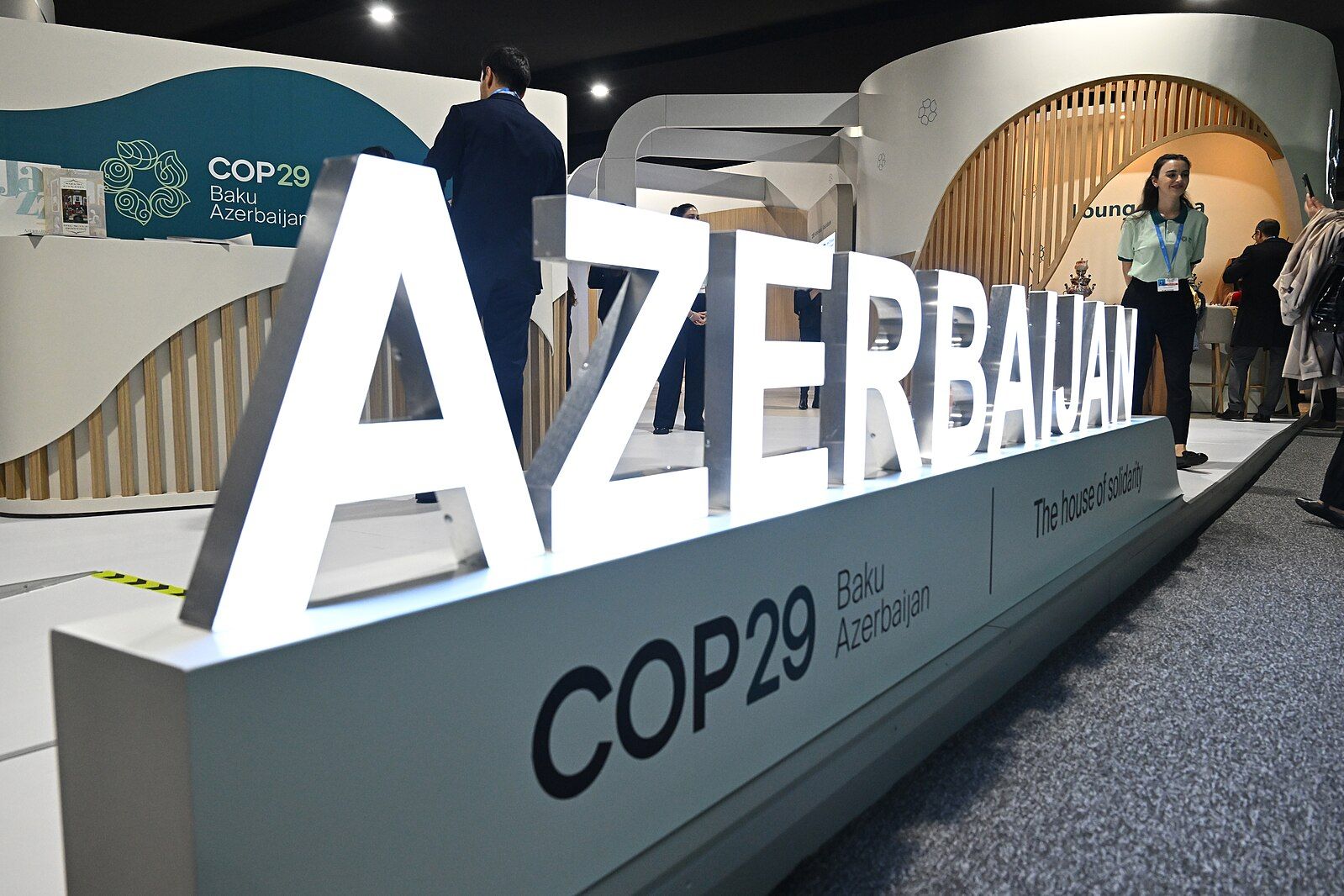
During COP 29 in November 2024, the focus was on financing climate action.
This major event brought together nearly 200 countries in Baku, Azerbaijan.
It was an opportunity for the European Commission to establish a new roadmap for the methane reduction partnership to accelerate the reduction of emissions linked to fossil energy production and consumption. Everything hinges on collaboration between partner countries, the International Energy Agency, and several non-governmental organizations.
This partnership represents a model of cooperation between fossil fuel importing and exporting countries. This will help companies improve their monitoring, reporting, and verification systems to reduce methane emissions.
According to Wopke Hoekstra, Commissioner for Climate Action, "Reducing methane emissions in the energy sector is an easily achievable goal for climate action. It's a matter of economic common sense. It helps strengthen our energy security while reducing emissions. The roadmap we are launching today shows the way forward for cooperation between importing and exporting countries. For the EU, it is clear: we can effectively reduce methane emissions only if we work together on global supply chains with all stakeholders."
As part of the global methane pledge launched by the EU and the United States, more than 150 countries are aiming for a collective goal of reducing global anthropogenic methane emissions by at least 30% by 2030, compared to 2020 levels.
This new roadmap outlines a system of monitoring, reporting, and verification based on the principles of the Oil and Gas Methane Partnership 2.0 (OGMP 2.0), as well as a project to reduce emissions from existing assets according to a precise schedule, an investment plan, and human resource needs.
According to the United Nations Climate Change Conference, "It took nearly a decade of work for countries to agree on the final elements that define how carbon markets will operate under the Paris Agreement, making country-to-country exchanges and a fully operational carbon credit mechanism."
The decision of COP 29 provides clarity on how countries will allow carbon credit exchanges between them and on the operation of the registries that will track them. It is established that environmental integrity will be guaranteed upstream through technical reviews within a transparent process.
On the first day of COP 29, countries agreed on standards for a centralized carbon market under the auspices of the United Nations (Art. 6.4 principle). A major advancement for developing countries, which will benefit from new financial flows. And good news for the least developed countries, which will receive support in capacity-building to enter the market.
Decarbonization and Carbon Credits
The 29th COP has opened a new chapter in the fight against climate change. At the heart of the discussions, carbon markets have finally found a regulatory framework after a decade of negotiations. The principle of carbon markets is based on an incentive mechanism: any project that reduces or captures a ton of CO2 generates a tradable carbon credit. This credit can be acquired by countries or companies seeking to achieve their climate goals.
COP29 marked a major milestone by finalizing the standards of Article 6 of the Paris Agreement. Two complementary systems were adopted: a centralized market under the auspices of the United Nations, and a bilateral approach, allowing countries to exchange credits directly. This flexibility can boost investments, ensuring increased transparency through a shared central registry.
An Economic Lever for Climate
According to the IETA (International Emissions Trading Association), carbon markets have the potential to mobilize $250 billion per year by 2030.
This financial windfall could offset up to 5 billion tons of CO2 annually by funding climate projects in developing countries. The major Bakou meeting also highlighted the need to support emerging economies by providing them with infrastructure and tools to access these new markets.
However, despite progress, obstacles remain. The risk of greenwashing is omnipresent: without a strict framework, companies could use these credits to improve their image without actually reducing their emissions.
Additionally, the issue of credit equivalence remains problematic. A credit from a reforestation project, for example, does not have the same value as a credit linked to direct fossil carbon capture, as trees are vulnerable to fires or other disasters.
Finally, let us remember the long road ahead and the one already traveled. Let us recall the essence of this site dedicated to sustainable development applied to our field of expertise, real estate:
The Brundtland Report adopted and published in 1987 by the United Nations commission for the environment and climate, which led to the Rio Summit in 1992, where a global partnership policy to combat climate change was initiated. A major turning point that would lead to the Kyoto Protocol signed in 1997.
It was there that, for the first time, the concept of sustainable development was put on the table to define the guidelines for the greenhouse gas reduction strategy.