
Michelin Green Star: when gastronomy and ecology come together
An accolade that rewards chefs committed to the planet. Today's gastronomy goes beyond the perfection of dishes: it now extends to preserving the planet. In recent years, the greatest chefs are not only judged on the finesse of a sauce or the precision of a cooking, but also on the environmental impact of their cuisine. It is in this spirit that the Michelin Guide created the Green Star in 2020, an accolade that honors eco-responsible restaurants committed to sustainable, local, and respectful of all living creatures practices.
🌟 What is the Michelin Green Star?
Launched in 2020, the Michelin Green Star complements the famous red stars. It distinguishes chefs who combine culinary excellence and environmental responsibility:
- local sourcing,
- respecting seasonality,
- reasoned resource management,
- fighting against waste,
- and promoting well-being in the workplace.
Unlike traditional distinctions, it can be awarded to any restaurant listed in the Michelin Guide, whether it is star-rated, Bib Gourmand, or simply recommended.
🌳 Assessment criteria: beyond the plate
The Michelin Guide does not only evaluate a chef's creativity or technical skills. It now focuses on the overall consistency of their approach.
1. Sustainable sourcing
Prioritizing local, seasonal ingredients from sustainable or organic farming.
2. Resource management
Reducing food waste, sorting and recycling waste, energy efficiency, and responsible water management.
3. Ecology and carbon footprint
Minimizing non-recyclable packaging, reducing plastic use, optimizing transportation, and responsible logistics.
4. Awareness
Conveying ecological values to customers and staff: food education, educational menus, highlighting the connection to nature.
5. Employee well-being
Promoting a fair, inclusive, and respectful work environment.
🔹 These criteria send a powerful message:
Eating well also means producing well, serving well, and thinking well.
🌾 The Doyenné: a living model of sustainable gastronomy
Among the awarded establishments, Le Doyenné, located in Saint-Vrain (Essonne), perfectly embodies the philosophy of the Michelin Green Star.
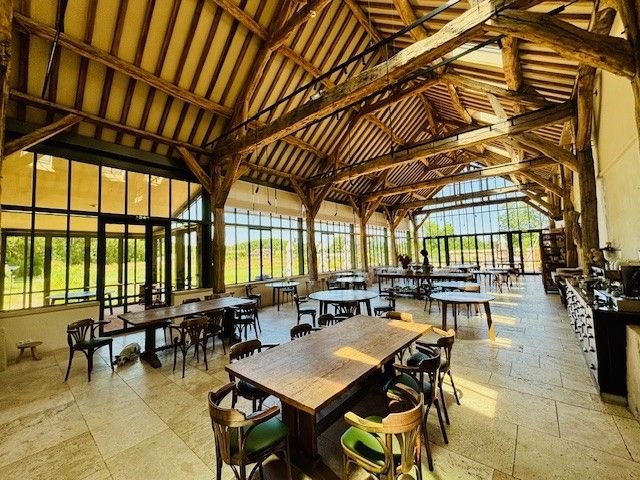
Directed by chefs James Henry and Shaun Kelly, this restaurant housed in a 17th-century former farm is based on a simple and radical concept:
Cooking what the earth offers, in harmony with the seasons.
On the two hectares of market gardening lands surrounding the restaurant, a team of market gardeners grow vegetables, herbs, and edible flowers. The garden’s products directly feed the menu, in a logic of ultra-short circuit and absolute respect for all living beings.
The Michelin Guide applauds their “exemplary commitment to agricultural, regenerative, and transparent gastronomy”. Here, the farm and the kitchen are one: each dish reflects the soil, climate, and the hands that cultivate it.
🏳️🌈 “We want our guests to feel the connection between the land and the plate.” — James Henry, chef at Le Doyenné
The Doyenné thus illustrates the vision of the Green Star: reinventing gastronomy from a living perspective, and not at the expense of it. Here, the plate becomes an extension of the landscape, and the meal, an experience of harmony between humans and nature.
🌳 A conscious and inspiring gastronomy
In France as well as abroad, establishments like Le Doyenné embody this new generation of committed chefs.
They prove that it is possible to combine gastronomic excellence and ecological awareness, without sacrificing flavor or emotion.
The Green Star becomes the symbol of a cuisine that nurtures both the body and the planet. It inspires a whole generation of restaurateurs to reconcile creativity and sustainability, tradition, and modernity.
Far from being a passing trend, the Green Star embodies a true paradigm shift in global gastronomy.
✨ The future of gastronomy will be sustainable
The Michelin Green Star is not just an award; it is a collective commitment. It reminds us that gastronomy, far from being an isolated luxury, can become a driver of ecological and social transition.
Through exemplary initiatives like Le Doyenné, the Michelin Guide shows the way:
Cooking for tomorrow is already taking action today.