
An Architecture that Evolves with the Climate
Buildings are among the largest energy consumers in the world, especially for heating, air conditioning, and lighting. At the same time, solar energy is the most abundant renewable resource we have. Faced with the climate and energy crisis, architecture can no longer afford to be passive. Space on urban rooftops is limited, making photovoltaic facades essential for modernizing buildings. What if a building's envelope could do more? What if it could move, think, and react to its environment—much like nature does?
A Case Study to Follow: KELLER Diamant, Winterthur, Switzerland
Context
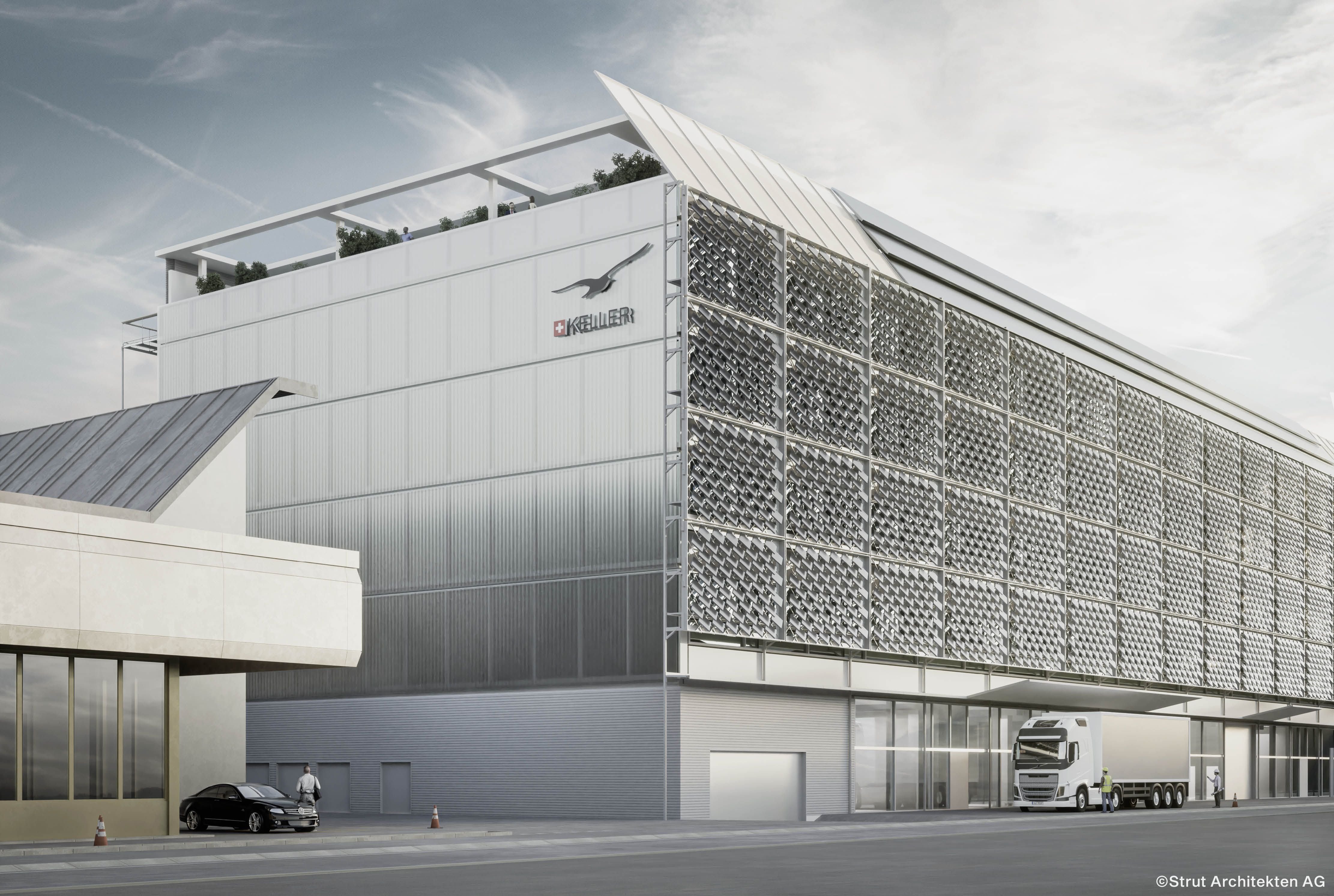
KELLER Druckmesstechnik AG faced two major challenges with its south-facing facade: excessive solar exposure leading to unwanted interior heating, particularly in summer, increasing the need for air conditioning, as well as high energy consumption of production machines. The architectural design of the building had to embody the company's values - precision and innovation - while ensuring a pleasant environment for employees. This balance between functionality and aesthetics was crucial for the project's success.
Implementation of Solskin
Solskin is integrated into the facade, creating a harmonious combination of smart shading and highly efficient solar energy production through sun tracking. This innovative and user-friendly solution combines corporate sustainability and design. With 3,500 movable modules covering 1,300 m², the Solskin facade dynamically adjusts its orientation to optimize solar energy production while ensuring effective shading, preserving natural light, and maintaining the building's aesthetic integrity. Mounted on an elegant facade mesh, the lightweight modules react in real-time to the environment, balancing energy efficiency, natural light control, and thermal comfort by interacting with their surroundings in a manner akin to natural systems.
Developed over more than a decade at ETH Zurich, implemented by the Zurich Soft Robotics spin-off, and supported by the Swiss Climate Foundation, Solskin merges photovoltaic innovation, robotics, and sculptural design into an intelligent building envelope. Suited for facades, pergolas, balconies, and skylights, this system serves as both a shading device and a source of renewable energy, promoting health, comfort, and energy independence.
Powered by artificial intelligence (AI) and lightweight actuators, Solskin adapts in real-time to light, heat, and user needs. It reduces energy consumption by up to 80%, generates clean electricity, reduces the need for air conditioning, and ensures thermal comfort—even in extreme weather conditions.
As climate pressure intensifies and cities strive for more resilience, architecture must evolve—and photovoltaic technologies are essential in the global effort to reduce carbon emissions and combat climate change. Buildings can no longer be inert boxes isolated from nature. They must interact, react, and contribute to the Global Climate Goals. This is architecture that learns, adapts, and thrives—just like the people and the planet it serves.
Learn more about Solskin projects https://www.solskin.swiss/en/s-projects-basic