
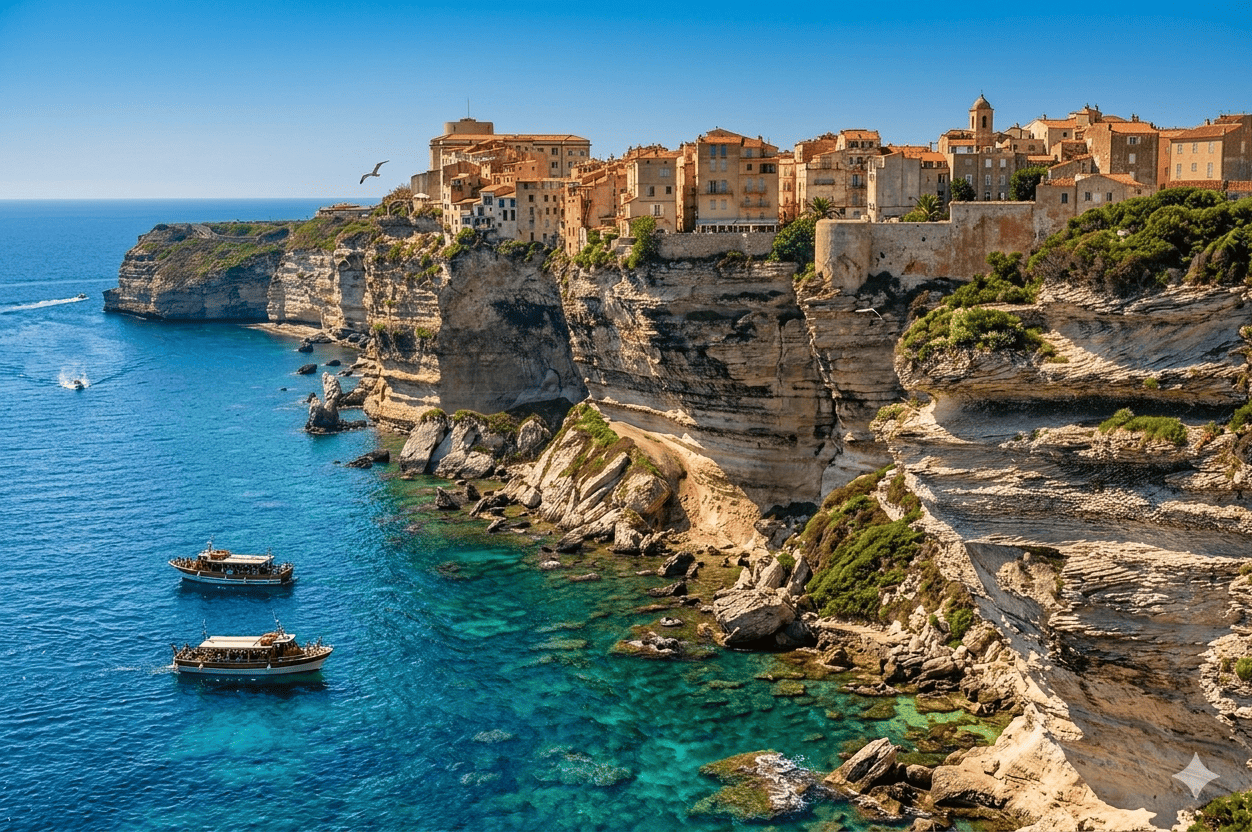
Building or Buying Eco-Friendly Properties in Corsica: What to Know in 2026
Buying or building a sustainable property in Corsica is not quite the same as on the mainland. Insularity, specific resources, particularly strict urban planning regulations, rigorous Mediterranean climate: these factors cumulate and require a good understanding of the context before embarking on a real estate project on the island. Here's what you need to know in 2026, whether you are a buyer of an existing property or a developer with a construction project.
Understanding the Framework of PADDUC
The Plan for Sustainable Development and Land Use Planning of Corsica (PADDUC) is the main urban planning document for the island. Adopted in 2015 and periodically revised, it defines buildable areas, agricultural zones, and protected natural areas across the Corsican territory, with an explicit aim of controlling urban sprawl and protecting natural and coastal spaces.
For a construction project developer, the first step is to check the buildability of the targeted land. Many apparently attractive plots turn out to be unbuildable according to the PADDUC or its communal implementation. This verification should be done prior to any purchase commitment, ideally with the support of a local notary familiar with Corsican specifics or directly with the town's urban planning department.
The same caution applies to existing properties located in coastal areas, subject to the Coastal Law and significant restrictions on extension or modification work. Rehabilitating an existing building to its original state is still possible, but any changes in volume, footprint, or parking may be restricted.
Local Materials, a Sustainable Asset
Corsica has exceptional local building materials that deserve to be favored in any sustainable approach.
Granite, found across much of the island, provides a highly durable construction stone. Used in rubble for traditional masonry or as cladding for contemporary buildings, it offers both high thermal inertia - valuable in the Mediterranean climate - and natural landscape integration.
Schist, prevalent in Cap Corse and Castagniccia, presents similar qualities with a different architectural character. The schist houses of Cap Corse are among the most accomplished examples of sustainable vernacular architecture in France.
Corsican chestnut, long an economic pillar of the island through the Castagniccia chestnut grove, provides remarkably durable timber, naturally resistant to insects and humidity. Its reintroduction in contemporary construction supports a local forestry sector undergoing renewal.
Southern Corsican cork constitutes a 100% naturally sourced thermal and acoustic insulator, particularly suited to the Mediterranean climate. Beyond Corsican materials, the use of more widely recognized bio-sourced materials - wood fiber, hemp, cellulose wadding - completes a palette perfectly adapted to sustainable constructions or renovations on the island.
The Water Autonomy Challenge
Water is arguably the resource that requires the most attention in Corsica. Despite a generous relief that feeds several permanent rivers, the island experiences recurrent water stress episodes in summer, accentuated by a tourist influx concentrated over a few weeks of the year. Summer restrictions on watering and pool filling have become routine in many municipalities.
For real estate properties, this constraint requires a structural approach to water autonomy. Generously sized rainwater collection (reservoirs of 10,000 to 30,000 liters for a family villa) can cover watering, and even supply toilets and some household equipment. When authorized and declared, boreholes offer additional autonomy. Graywater management - treatment and reuse of shower and sink water for irrigation - constitutes a complementary solution still underutilized but growing.
Landscape design also plays a significant role. A Mediterranean garden composed of drought-resistant endemic species - olive trees, mastic trees, rockroses, rosemary, lavender - requires little water and respects the island ecosystem. This approach contrasts with lawns and exotic plantations that consume large amounts of water in summer.
Energy Autonomy, an Insular Necessity
The Corsican electricity grid partially depends on submarine cable imports from the mainland and Italy, creating structural tension during peak summer periods. Power outages or voltage drops are not uncommon, and the island's electricity production continues to rely significantly on poorly virtuous thermal power plants.
In this context, investing in electricity autonomy takes on a dimension that goes beyond a mere ecological approach. Corsica's exceptional sunshine - among the highest in France - makes photovoltaic solar power particularly profitable, with amortization periods often below 8 years for a domestic installation. The addition of household batteries allows almost total autonomy for properly sized properties. For properties in exposed areas, domestic wind power can complement the setup.
This combination - integrated photovoltaic solar, batteries, sometimes wind - brings some contemporary Corsican properties close to the standard described in our passive house guide, with energy autonomy sometimes exceeding what is observed on the mainland.
New Construction in Corsica: Ballpark Figures
Building new in Corsica presents economic specificities linked to insularity. The cost of materials imported from the mainland is increased by 10 to 20% due to transportation expenses, reinforcing the economic interest of exceptional local materials. The labor cost is generally on par with the national average, with specialized artisans in traditional construction (stone, schist, chestnut) particularly valuable for demanding projects.
For a bioclimatic new villa complying with RE 2020 standards, expect a construction cost ranging from €2,200 to €3,500 per square meter depending on the features, excluding land. The additional cost compared to an equivalent mainland construction is justified by logistical constraints and the use of exceptional local materials. For a Passive House level project, the extra cost reaches an additional 10 to 20%.
Buildable land remains scarce and expensive in Corsica, especially in the south and on the coast. Reasonably priced accessible plots are mainly found in the interior, sometimes far from major urban centers - which can be an advantage for those seeking peace and nature but requires consideration for daily mobility.
Buying an Existing Property to Renovate
Purchasing a village house or an old shepherd's hut to renovate is a coherent alternative with a sustainable approach. Corsica has a significant stock of ancient properties in need of deferred rehabilitation, especially in the inland villages. A 150 m² stone house to renovate can be found starting from €150,000 to €300,000 in the interior, sometimes less in the most remote villages.
Renovation must be carried out respecting traditional materials: lime-based coatings rather than cement, mortars compatible with the original stone, breathable insulation (wood fiber, hemp, cork). A renovation to a high energy standard, with internal insulation (external thermal insulation often impossible on protected old buildings), replacement of wooden joinery, and installation of ecological heating (heat pump, pellet stove), represents an investment of €1,500 to €2,800 per square meter.
For properties located in classified historic centers - Bastia, Ajaccio, Bonifacio, Calvi - certain operations may be eligible for the Malraux Law, which finances part of the work through a tax reduction. Eligibility depends on the exact scope and associated architectural constraints.
Find a Sustainable Property in Corsica
Sustainable Real Estate lists sustainable real estate properties across the entire Corsican territory, from premium southern locations to confidential inland villages. The Corsica page gathers the regional selection, filterable by location, sustainable criteria, and property type.
For the most iconic heritage properties - restored village houses, vineyard estates, exceptional rural properties, converted old convents - the Heritage section extends the selection with an enhanced heritage dimension. Buyers sensitive to the architectural aspect of the project can also draw inspiration from the work of contemporary Corsican architects, whose principles of intervention on the built heritage provide a valuable framework for assessing the quality of a renovation operation.
Sustainable Real Estate selects sustainable real estate properties throughout France. Discover the Corsican selection on the Corsica page and the 7 sustainable criteria applied to each property.