
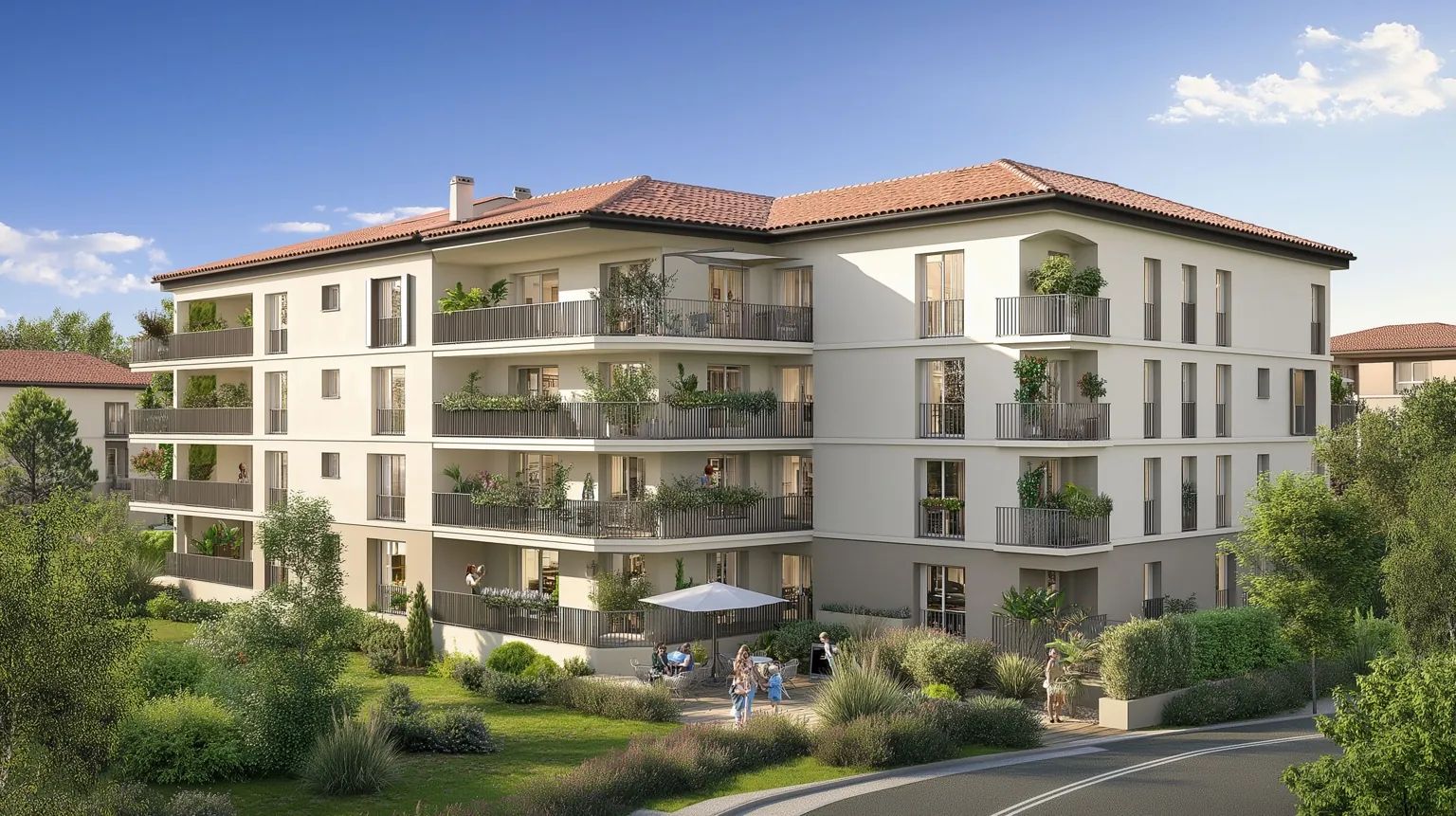
New real estate and sustainable housing: why it's the right time to buy (or rent) an eco-responsible property at a good price
Since the end of 2023, the real estate market has experienced a significant slowdown. The combination of higher interest rates, stricter credit conditions, and a tense economic climate has slowed down acquisitions. For you, this is the perfect opportunity.
🌱 What a new housing generally guarantees in 2025
Not all new properties are identical, but since the introduction of the RE2020 (Regulation Environmental 2020), standards have significantly evolved. Here's what you can expect in most recent developments:
✅ 1. Enhanced environmental standards
Adopted in 2022, the RE2020 replaces the RT2012 with more stringent requirements:
• Reduction of the building's carbon footprint, including during construction,
• Improved energy performance (heating, ventilation, hot water...),
• Increased summer comfort to cope with increasingly frequent heatwaves.
This results in less energy-consuming, better designed, and healthier living spaces.
✅ 2. High-level thermal and acoustic insulation
New buildings have excellent thermal insulation that helps reduce energy consumption related to heating or air conditioning. In addition, there is enhanced sound insulation, particularly valuable in urban areas.
✅ 3. Low-impact heating and hot water
Sustainable homes are often equipped with efficient systems:
• Air/water or geothermal heat pumps,
• Thermal solar panels for hot water,
• Condensing boilers for better efficiency.
These systems help reduce CO₂ emissions while ensuring optimal thermal comfort.
✅ 4. Ecological water management
Some new developments integrate, from the design stage:
• Rainwater harvesting systems for irrigation or toilets,
• Reservoirs or wells to reduce reliance on the public network,
• Systems for treatment or recycling of greywater, contributing to overall consumption reduction.
✅ 5. Recycling and waste reduction
In a circular construction approach, new buildings are increasingly equipped with:
• Appropriate waste disposal areas for selective sorting,
• Shared composters,
• Shared spaces designed to minimize waste production (delivery lockers, shared equipment...).
♻️ Criteria for identifying truly eco-responsible housing
Not all new properties are environmentally friendly by default. Some projects only meet the legal minimum, while others embrace a voluntary and ambitious ecological approach. Here are the key criteria to consider:
• ✅ Environmental label: RE2020 is mandatory, but also check for certifications like BBC (Low Consumption Building), HQE (High Environmental Quality), Effinergie+, or Passive House.
• ✅ Type of heating and hot water: prioritize renewable energy equipment (heat pump, solar, biomass...).
• ✅ Durable materials: the use of bio-sourced materials (wood, hemp, cork), recycled, or local materials is an excellent indicator.
• ✅ Bioclimatic design: good building orientation, abundant natural light, well-thought-out natural ventilation are all markers of a serious approach.
• ✅ Integrated soft mobility: proximity to public transport (metro, tram, RER, bus), charging stations for electric vehicles, secure bike spaces.
• ✅ Green spaces and biodiversity: shared garden, green roofs, planted trees, soil preservation...
🌍 Towards energy autonomy: more independent properties
Some new properties go even further and aim for a form of partial or total energy autonomy. This means:
• Local electricity production through photovoltaic panels, domestic wind turbines, or hydroelectric turbines,
• Electricity storage through domestic batteries,
• Intelligent consumption control via home automation systems.
These properties are true resilient hubs against energy market fluctuations and potential outages. They drastically reduce carbon emissions and represent a highly appreciating asset.
💶 Real financial advantages
Contrary to popular belief, buying or renting a sustainable new property is not out of reach. Better yet, in the current context, it can even be cheaper in the long run.
For buyers:
• Significant discounts on unsold lots,
• Reduced notary fees (2 to 3%),
• Lower running costs (less heating, optimized maintenance),
• Eligibility for the Zero Rate Loan (PTZ) for first-time buyers,
For tenants:
• Lower cost of daily living, thanks to reduced energy bills,
• Better comfort without the need for renovation.
🏙️ Where to find these types of properties in Paris or the Île-de-France region?
The good news is that more and more developments meet these requirements. Eco-neighborhoods are emerging, especially in the outer districts (12th, 13th, 19th, 20th) or in the inner suburbs (Montreuil, Ivry, Issy, Boulogne...).
The platform sustainablerealestate.fr references these sustainable properties, with a rigorous selection based on the following eco-responsibility criteria:
• Energy Performance Certificate A, B, or C,
• Energy autonomy,
• Natural or recyclable materials,
• Ecological heating,
• Water recovery and recycling systems,
• Access to soft mobility.
✅ In summary: a good time to invest in sustainable housing
Today, buying or renting an ecological new property allows you to:
• Reduce your environmental impact,
• Make long-term savings,
• Protect your energy purchasing power,
• And live in a healthier, more comfortable, more resilient environment.
In a market undergoing significant changes, there is a unique opportunity to access this type of property at a competitive price. The key is to be able to identify them.
At Sustainable Real Estate, we are committed to assisting you in this search by showcasing only properties that are in line with the highest environmental standards.
Don't wait for the market to rise again: the best sustainable deals are happening now!