
Sustainable Real Estate in the Alps: Chalets, Renovations, and a New Mountain Model
The Alps are undergoing a profound transformation. Melting glaciers, dwindling snow cover at intermediate altitudes, and stricter energy standards are pushing the alpine real estate market to rethink its model. The poorly insulated traditional chalets, a legacy of the large construction waves of the 1960s to 1980s, must now evolve. A new generation of newly built or renovated properties is emerging, reconciling the mountain chalet imagery with contemporary sustainability requirements. Here is a 2026 overview of the sustainable alpine market.
A Changing Landscape
The alpine real estate landscape is dominated by constructions from the 1960s to 1990s, a period of ski resort expansion. A large portion of this housing is now classified in French energy performance ratings D, E, or F, with very high heating costs and often mediocre thermal comfort. The Climate and Resilience Law is accelerating the renovation movement: the schedule to ban the rental of energy inefficient properties (G in 2025, F in 2028, E in 2034) particularly affects the Alps, where a significant part of the housing stock consists of seasonally rented second homes.
For buyers, this transformation poses both a risk and an opportunity. The risk: purchasing a property that cannot be rented out in a few years without substantial work. The opportunity: benefiting from discounts on properties to renovate, in a structured investment approach with renovations supported by energy efficiency programs.
The Bioclimatic Chalet, a Contemporary Reinvention
The traditional architecture of alpine chalets already included solid bioclimatic principles: south-facing main facade, projecting balconies providing shade, steep roofs with generous eaves, stone base for thermal mass, and local timber frame. These principles were partially lost in constructions from the 1960s to 1990s, which prioritized productivity and standardization over climatic coherence.
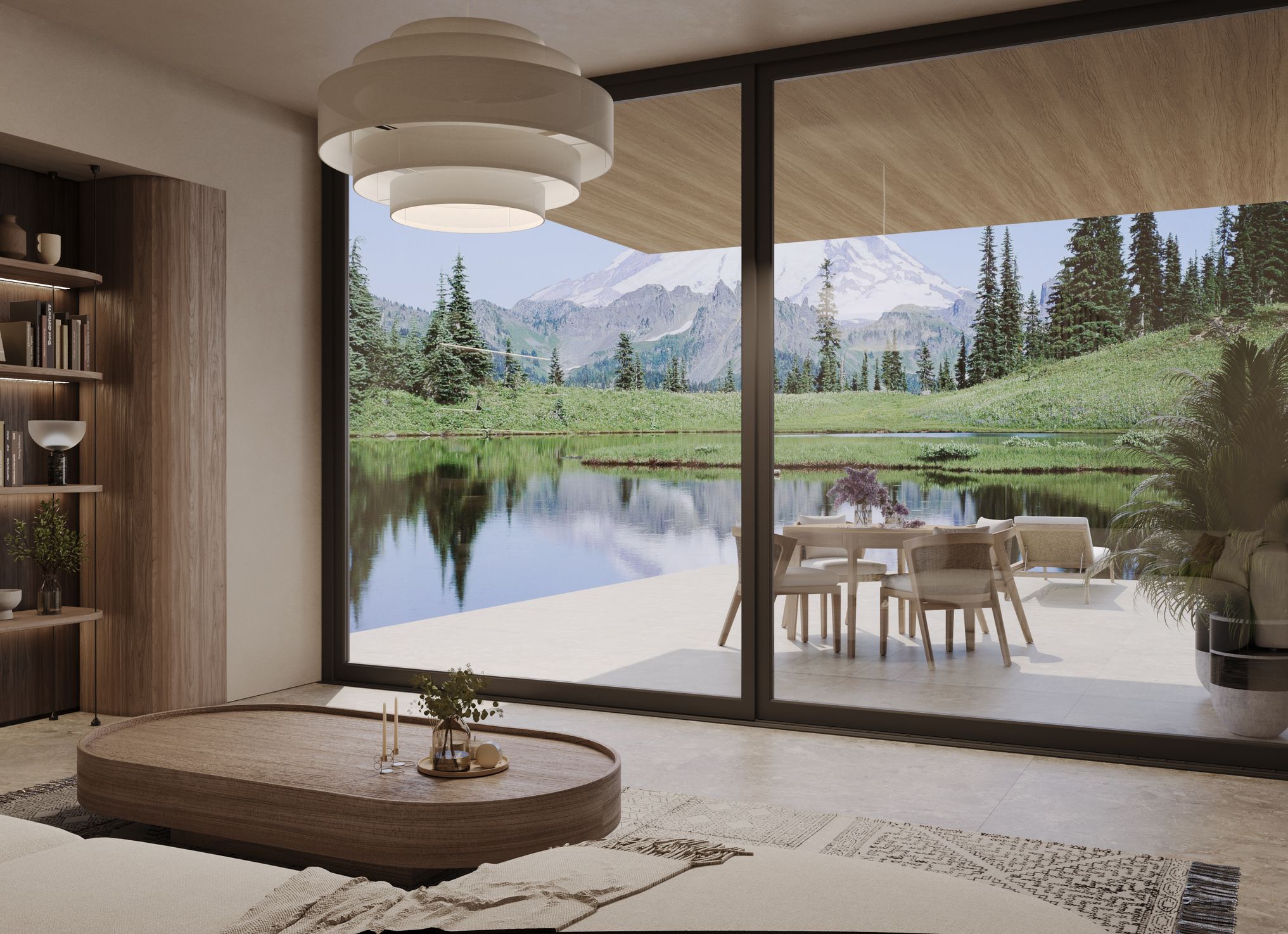
The new generation of bioclimatic chalets reintroduces these fundamentals while incorporating contemporary standards. Enhanced insulation with sustainable materials (wood wool, cellulose wadding, sometimes straw), high-performance triple glazing, highly efficient dual-flow ventilation suitable for cold climates, and meticulous airtightness. Some projects even achieve the Passivhaus standard, detailed in our complete guide to passive houses, particularly suited to rigorous climates where every saved kWh significantly impacts the annual budget.
Local wood - larch, spruce, fir - is making a comeback, used for framing, cladding, and interior finishes. Beyond aesthetics, this return to regional materials significantly reduces the construction's carbon footprint and supports the local forestry industry that has long struggled against competition from imported wood.
Segments of the Sustainable Alpine Market
The sustainable real estate market in the Alps is structured around several distinct segments.
The high-altitude chalet remains the iconic segment. In established resorts in the Northern Alps - Megève, Courchevel, Méribel, Val d'Isère, Chamonix, Les Gets - bioclimatic new chalets are sold at high levels: between €10,000 and €25,000 per square meter for high-end new properties, now incorporating sustainability standards. For a new 200 m² chalet in a popular resort, expect an entry ticket between €2 and €5 million, or more in the most sought-after locations.
Exemplary renovations of old chalets constitute a fast-growing segment. Savvy buyers identify chalets built in the 1970s or 1980s, structurally sound but with poor energy performance, and transform them into high-performance properties through external thermal insulation, complete window replacements, and the installation of eco-friendly heating systems (geothermal heat pumps, pellet boilers, sometimes complemented by solar thermal). The cost of such renovation typically ranges between €1,500 and €2,800 per square meter depending on the extent of the work, in addition to the property's purchase price.
New apartment buildings in resorts form another interesting segment. Recent new developments in resorts - when they meet sustainability criteria and include efficient heating systems - offer an accessible compromise between high-altitude villas and standard studios. For rental investors, these properties can fit into the Jeanbrun system with rental returns often higher than urban primary residences, thanks to the dual ski and hiking seasonality.
Medium Altitude, a Future Segment
Beyond major high-altitude resorts, an interesting segment is developing in medium-altitude villages - between 800 and 1,200 meters - where energy-efficient renovations of old chalets make sense. Beaufortain, Abondance Valley, Aulps Valley, Maurienne, Briançonnais offer properties at significantly more affordable prices than the flagship resorts - typically €2,000 to €4,500 per square meter for chalets to renovate - while benefiting from a preserved environment and a lifestyle coherent with sustainability efforts.
This medium altitude offers a specific advantage in the face of climate change: less dependent on snow, hence less long-term depreciation risk compared to ski-dependent resorts. Buyers prioritizing mountain authenticity, summer hiking, and remote work find in these villages a meaningful compromise between price, quality of life, and climate resilience.
Energy Autonomy, a Specific Challenge
The Alps provide a particularly favorable setting for electricity self-sufficiency. The annual sunshine duration surpasses many lowland regions, especially above the temperature inversion fog that blankets some valleys in winter. Photovoltaic solar panels operate efficiently, and snowfall, when it occurs, can paradoxically enhance production thanks to the snow's reflective effect on the modules.
Ground-source geothermal energy is another solution suited to the mountains, especially for chalets with sufficient land. Geothermal heat pumps offer high performance even in extreme cold, making them an ecologically sound heating solution perfectly suited to the alpine climate. For properties isolated from utility networks, certain configurations can achieve near total energy autonomy by combining photovoltaic solar, domestic batteries, and geothermal heating.
Finding a Sustainable Property in the Alps
Sustainable Real Estate showcases highly energy-efficient properties throughout the French Alps, from iconic resorts in Haute-Savoie to more secluded villages in Savoie, Hautes-Alpes, and Isère. The Alps page consolidates the regional selection, filterable by location, sustainable criteria, and property type. For exceptional heritage properties - restored old chalets, converted mazots, rehabilitated alpine farms - the Heritage section extends the selection with properties of significant architectural and heritage value.
Sustainable Real Estate selects very high energy-efficient properties throughout France. Discover the alpine selection on the Alps page and the 7 sustainable criteria applied to each property.