
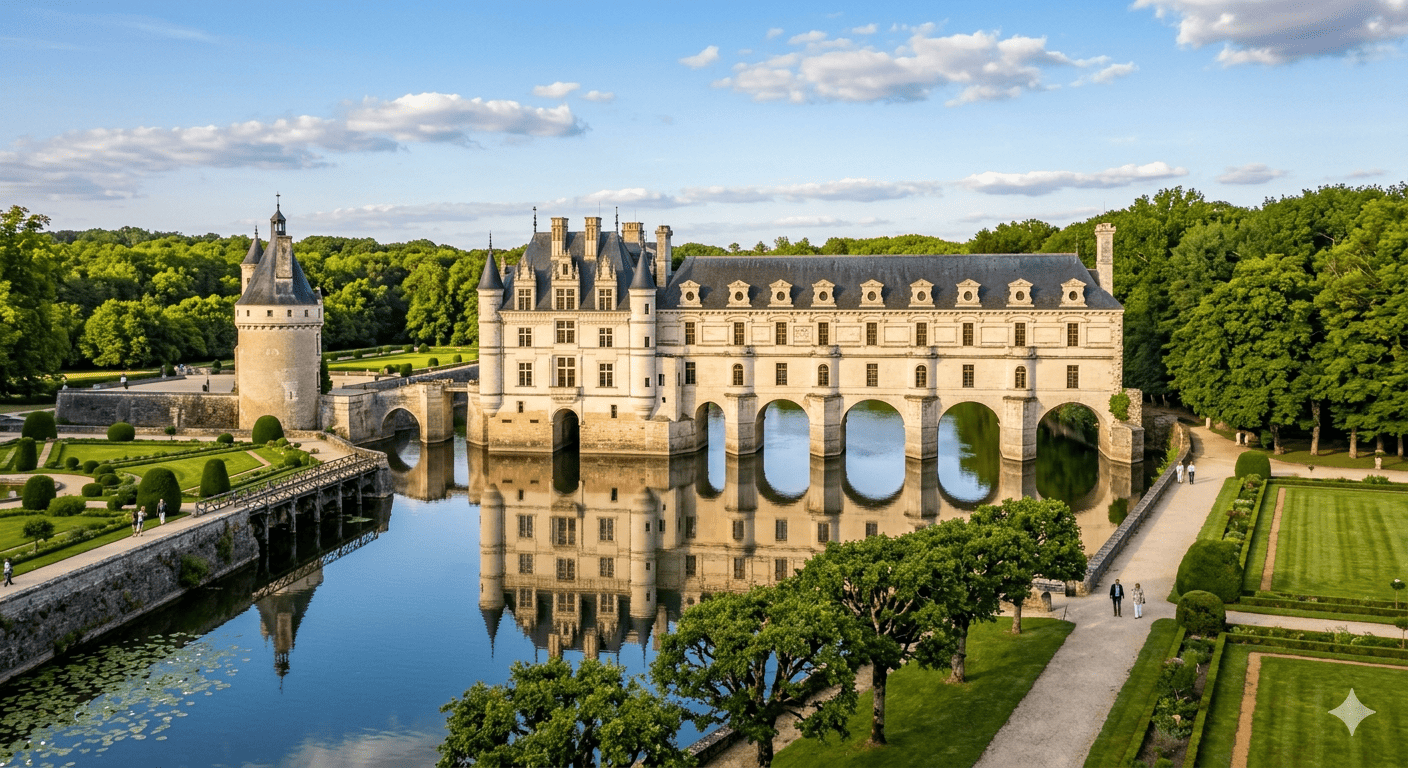
Malraux Law 2026: the complete guide to investing in heritage
Created in 1962 at the initiative of André Malraux, then Minister of Culture, the law bearing his name is one of the most powerful tax schemes in the French real estate market. Designed to encourage the restoration of historic centers, it now targets heavily taxed taxpayers who wish to combine heritage commitment and tax optimization. Here's what you need to know about the scheme in 2026.
What is the Malraux Law?
The Malraux Law is a tax scheme that allows French taxpayers to benefit from an income tax reduction in exchange for complete restoration work on an old building located in a protected area. The logic is simple: the State agrees to finance part of the work through a tax reduction, on the condition that these works contribute to the preservation of architectural heritage.
The scheme mainly targets taxpayers with a high marginal tax rate - typically over 30% - who seek a powerful tax optimization lever. Notably, the Malraux tax reduction is exempt from the 10,000€ annual tax niche cap, unlike most other schemes. It can therefore be combined with other tax advantages.
Which properties are eligible for the Malraux Law?
To be eligible for the Malraux Law, a property must be located in a zone precisely defined by the State. Since the LCAP law of 2016, these areas have been grouped under the single appellation of Remarkable Heritage Sites (SPR), which cover the former safeguarded sectors, ZPPAUP, and AVAP.
There are two different rates based on configuration:
Remarkable Heritage Site with PSMV - Approved Safeguard and Enhancement Plan. These are the most protected zones in historic centers, formerly known as "protected sectors." Maximum rate: 30%.
Remarkable Heritage Site with PVAP - Architecture and Heritage Enhancement Plan. Extended protection zones around historic centers. Rate: 22%.
Many cities are concerned and cover almost all French historic centers: Bordeaux, Toulouse, Carcassonne, Albi, Montauban, Avignon, Bayonne, Cahors, as well as many historic neighborhoods in Paris and major metropolitan areas. Eligibility depends on the exact address of the property, which must be verified with urban planning services or the Architects of Historic Monuments (ABF).
What is the tax reduction rate in 2026?
The 2026 Malraux scheme entitles to an income tax reduction calculated on the amount of restoration works. Two rates apply according to the zone:
- 30% for properties located in an SPR with an approved PSMV
- 22% for properties located in an SPR with an approved PVAP
The eligible work expenses cap is set at 400,000€ over a period of 4 consecutive years, which corresponds to a maximum tax reduction of up to 120,000€ over 4 years. This cap applies per taxpayer, regardless of the number of Malraux properties owned.
For example, an investor carrying out 300,000€ worth of work in a PSMV sector benefits from a total tax reduction of 90,000€, spread over the duration of the works (usually 2 to 4 years). If the reduction exceeds the tax due in a year, the excess can be carried over to the following 3 years.
Conditions to meet to benefit from the scheme
The Malraux scheme imposes several strict conditions that the investor must meet to retain the tax reduction benefit.
Complete restoration of the building. The works must involve a full restoration, approved by a building permit or prior declaration. Superficial or routine maintenance works are not eligible. The supervision of an Architect of Historic Monuments is mandatory in most cases.
Obligatory rental. The restored property must be rented unfurnished, for use as the tenant's primary residence, for a minimum of 9 years. The lease must start within 12 months of the completion of the works.
No rental to a family member. The tenant cannot be a member of the investor's tax household, nor an ascendant or descendant.
No rent ceiling or tenant income limit. Unlike the Pinel scheme or the Jeanbrun scheme, the Malraux Law does not impose a rent ceiling or tenant income limit. The investor can rent at market prices.
In case of property sale before 9 years or cessation of the lease, the granted tax reduction is entirely recovered by the tax authorities. The total commitment, including the duration of the works (usually 2 to 4 years) and the 9 compulsory rental years, therefore amounts to 11 to 13 years.
Malraux Law or other schemes: what choice?
Several tax schemes can apply to heritage properties. Here are the main distinctions:
Malraux Law - 22% or 30% tax reduction on works, 400,000€ cap over 4 years, outside the tax niche cap, 9-year rental commitment.
Historical Monuments - 100% deduction of works from global income (not just tax reduction), no cap, but only for properties classified or listed as historical monuments.
Property Deficit - deduction of work expenses from taxable rental income, or even from global income up to 10,700€ per year. More accessible but less powerful than Malraux for major projects.
Jeanbrun Scheme - fiscal depreciation of up to 80% of the housing value over 9 years, applicable to new and old properties without geographic limitations. Different logic (depreciation rather than tax reduction).
For properties located in the most protected areas (PSMV), the Malraux Law is generally the most powerful lever if the investor has high taxation and investment capacity allowing for substantial works. For classified properties as Historical Monuments, the eponymous scheme is more advantageous. For smaller projects or investors with average taxation, the property deficit scheme remains relevant.
Where to find eligible properties
Properties eligible for the Malraux Law are naturally concentrated in old historic centers. The Heritage section of Sustainable Real Estate lists sustainable heritage properties, including buildings and apartments located in protected areas. The approach perfectly aligns with the spirit of the Malraux Law: rehabilitating existing instead of demolishing and rebuilding is an ecological approach that avoids land consumption and preserves the carbon footprint of already built structures.
The exact eligibility of a property must always be validated in advance with the town's urban planning services and, most often, with an Architect of Historic Monuments. A wealth management advisor or a specialized notary can also assist in the application process.
Sustainable Real Estate selects sustainable heritage properties eligible for French tax schemes. Discover the Heritage section and explore the 7 sustainable criteria applied to each property.