Sustainable real estate in Provence: a reimagined heritage
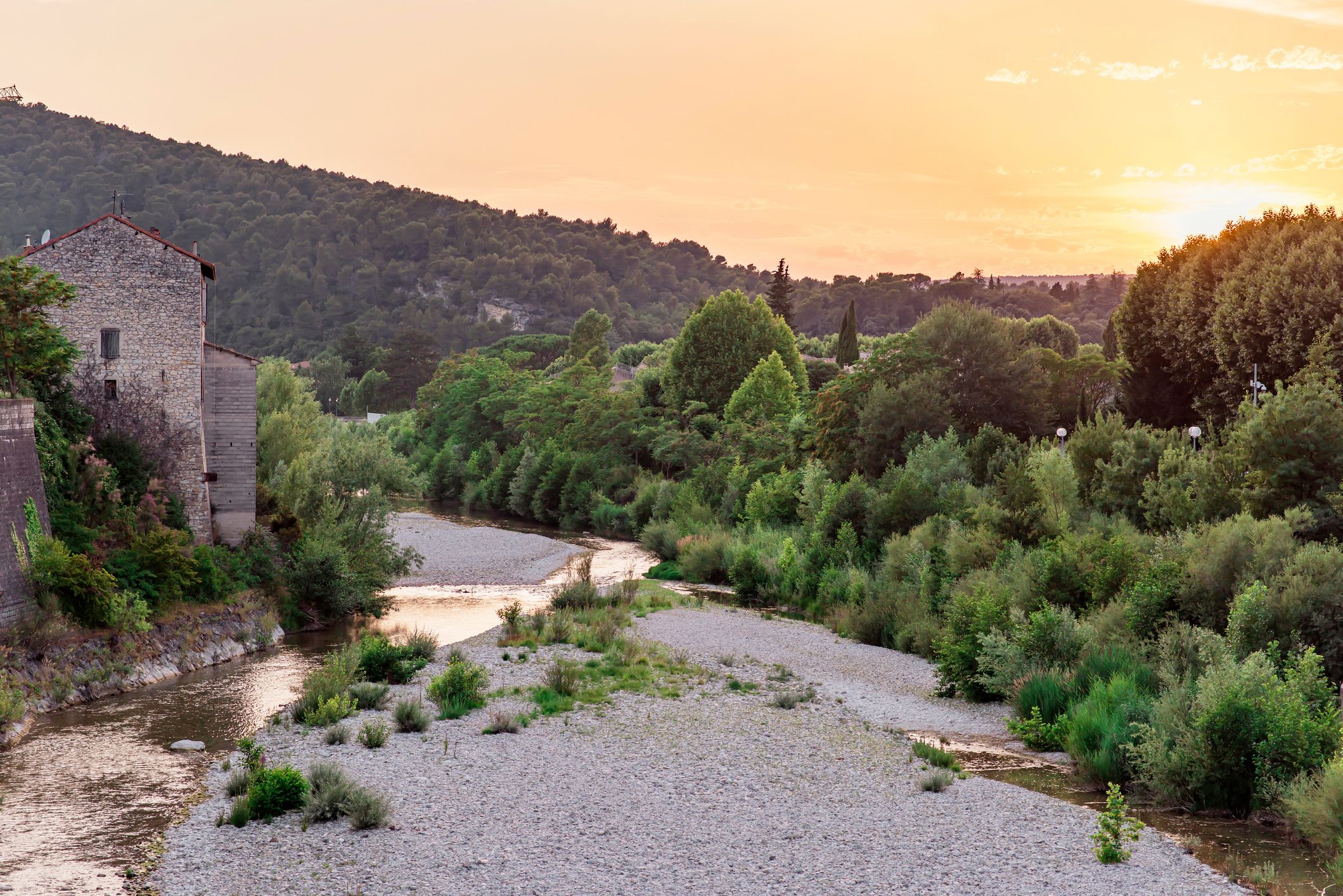
Provence offers a naturally conducive environment for sustainable real estate. Its climate, local materials, Mediterranean architectural tradition, and exceptional built heritage make up an ecosystem where sustainability is not a recent import but an ancient logic, simply brought up to date. Here is a 2026 overview of the Provençal market.
An already bioclimatic vernacular architecture
The mas, bastide, magnanerie, borie: traditional Provençal architecture has developed principles over the centuries that contemporary science is rediscovering today under the term bioclimatism. Thick walls made of limestone offering strong thermal inertia, small openings to the north and large windows to the south, terraces shaded by trellises and plane trees, carefully oriented with respect to the mistral, low-sloped roofs covered with canal tiles creating a ventilated air gap.
This architectural vocabulary is not a folkloric decoration. It is a functional response to the Mediterranean climate, which combines intense summer heat, dry winds, maximum sunshine, and mild but humid winters. Contemporary requirements of the RE 2020, especially regarding summer comfort and thermal inertia, scientifically validate these historical choices.
For buyers seeking a sustainable property, Provence offers two types of opportunities: restoring an old building whose foundations are already in line with sustainability, or building anew by reinterpreting this vocabulary with current technical standards.
The mas and the bastide - restored heritage
The restoration of mas and bastides is one of the most interesting segments of sustainable real estate in Provence. When carried out with rigour, respecting the original materials - limestone, lime, wood, terracotta - it produces properties that combine heritage value, real energy performance, and limited carbon footprint.
The ecological argument for restoration is powerful. Rehabilitating an existing building avoids the consumption of new materials, the excavation of virgin land, and soil sealing. The Heritage section of Sustainable Real Estate is precisely based on this logic - the most responsible building is often the one that already exists.
For properties located in the historic centers of Avignon, Aix-en-Provence, Salon-de-Provence, or Tarascon, some operations are eligible for the Malraux Law, which financially supports part of the restoration work through taxation. Combining this fiscal mechanism with a sustainable approach results in particularly coherent projects.
Contemporary bioclimatic villas
Alongside the heritage segment, Provence is witnessing a growing number of contemporary bioclimatic villas. Built by local or international architects, these houses reinterpret the Provençal vocabulary with modern techniques: integrated solar panels, geothermal energy, double-flow ventilation, bio-sourced materials replacing conventional insulation, wooden structures where the land allows.
The Luberon, the Alpilles, the Pays d'Aix, and the Var backcountry concentrate most of these projects. The entry ticket for a high-quality new bioclimatic villa typically ranges from 800,000 euros to 3 million euros depending on the municipality and surface area. Prices lower than those on the Côte d'Azur for often equivalent services, making Provence a credible alternative for buyers not specifically seeking the seaside.
Water stress - a central issue
Provence is at the forefront of Mediterranean water stress. Summer watering and pool filling restrictions have become recurrent, and some municipalities have experienced severe restrictions in recent years. Water self-sufficiency has become a major purchasing criterion for properties in Provence, on several levels.
Rainwater harvesting allows for garden and vegetable patch watering without relying on the public network. When permitted, boreholes provide additional self-sufficiency. Greywater management can supply toilet flushing and irrigation. Landscaping also plays a role: a dry Mediterranean garden, composed of local species adapted to drought (olive trees, lavenders, rosemary, cypresses), requires little water and respects the ecosystem.
On Sustainable Real Estate, the "Water Self-Sufficiency" label identifies properties equipped with these devices. It is one of the most visibly distinguishing criteria for well-thought-out Provençal properties.
Aix, Avignon, Marseille - sustainable urban markets
Alongside the rural mas and villa market, Provence has three significant urban markets for sustainable real estate.
Aix-en-Provence focuses on strong demand for renovated apartments in the historic center. The private mansions and buildings in the Quartier Mazarin or on the Cours Mirabeau are undergoing demanding energy-efficient renovations, sometimes eligible for schemes like the Malraux Law or the Monuments Historiques status. Demand in this segment is high, and properties classified as DPE A or B command a significant premium.
Avignon boasts exceptional built heritage, especially in the UNESCO classified perimeter. Renovations must be carried out under the supervision of the Architects of Buildings of France, making them demanding projects but often eligible for significant tax benefits.
Marseille is undergoing a different dynamic, with a profound transformation of historic neighborhoods (Joliette, Vauban, Le Panier) where energy renovations are progressing. The market is more accessible than Aix or Avignon, making it an interesting target for rental investors.
The Provençal way of life and daily ecology
The ecological commitment in Provence goes beyond real estate. The region boasts a remarkable concentration of producers in organic agriculture, local markets, and restaurants committed to sustainable practices. Choosing a property in Provence today also means joining a territorial ecosystem where access to local products, traditional building craftsmen, and committed architects is facilitated.
This territorial coherence is one of the strongest arguments for buyers seeking coherence between their living environment and lifestyle. Provence is not just a setting - it is a way of living designed for the long term.
Finding a sustainable property in Provence
Sustainable Real Estate features sustainable properties all over Provence, from renovated apartments in Aix to mas in the Luberon and contemporary villas in the Alpilles. The Provence page gathers the entire regional selection, filterable by location, sustainable criteria, and property type.
The most emblematic properties are also featured in the Heritage section when their heritage dimension justifies it. For buyers sensitive to architecture, reading interviews with engaged architects sheds light on the coherence between heritage transformation and ecological commitment.
Sustainable Real Estate selects sustainable properties across France. Explore the Provençal selection on the page Provence and discover the 7 sustainable criteria applied to each property.